
Call us now :08045477019
 Send Inquiry
 Send Inquiry
PACS - Picture Archiving and Communication Software
PACS - Picture Archiving and Communication Software Specification
- Audit Trail
- Comprehensive activity logs
- Compliance
- HIPAA and regional regulatory compliance
- User Interface
- Customizable, user-friendly interface
- Mobile Support
- Access images securely from mobile devices
- Image Processing Tools
- Enhanced diagnostics with advanced viewing tools
- Backup
- Automated Data Backup and Disaster Recovery
- Data Storage
- Centralized server-based or cloud-based
- Scalability
- Modular and Scalable Design
- Product Name
- PACS - Picture Archiving and Communication Software
- Maintenance
- Remote and on-site technical support
- Operating System
- Windows and Linux compatible
- Image Support
- Supports CT, MRI, X-ray, Ultrasound, and PET scans
- Function
- Storing, retrieving, distributing and presenting medical images
- Bandwidth Optimization
- Efficient image streaming and transfer
- Languages Supported
- Multilingual support available
- Integration
- HIS and RIS Compatibility
- Type
- Medical Imaging Software
- Access
- Multi-user, Remote Access
- Updates
- Automatic and scheduled software updates
- Reporting
- Integrated reporting tools
- Client Support
- 24/7 Customer Assistance
- Security
- Role-Based Access Control, Data Encryption
- Connectivity
- DICOM standard support
- Application
- Hospital, Clinic, Radiology Centers
- Data Migration
- Easy migration from legacy PACS systems
About PACS - Picture Archiving and Communication Software
Capitalise on blue-ribbon medical imaging technology with PACS - Picture Archiving and Communication Software, engineered for first-string diagnostic precision. Leverage unprecedented efficiencies with features like advanced image processing, reduced bandwidth usage, and discount on total expenditure through easy migration from legacy systems. This robust solution integrates seamless data storage, compliance, audit trails, and scalable server or cloud-based management. Enjoy multi-user, remote access with DICOM standard support and airtight security-making it an ideal choice for Indian hospitals, clinics, and radiology centers seeking best-in-class medical imaging software.
PACS - Picture Archiving and Communication Software: Unmatched Flexibility and Innovation
PACS stands apart by offering modular, scalable architecture and customisable user interfaces, ideal for large hospitals and boutique radiology centres alike. Its superior bandwidth optimisation and compliance with global standards provide a definitive edge. Core highlights include integrated reporting, multilingual support, HIS/RIS integration, and unparalleled mobile accessibility-making it the go-to choice for stakeholders aiming for robust, future-ready imaging workflows.
Main Domestic Market Reach, Cost-Efficiency, and Seamless Logistics
PACS firmly establishes its presence in India's premier healthcare segment, delivering solutions at the lowest price without compromising quality. With flexible payment terms and a transparent sample policy, expenditure is meticulously optimised. Our logistics streamline deployment and ongoing maintenance for swift, secure delivery and minimal disruption. PACS embodies a holistic, customer-first approach from purchase through continuous service.
PACS - Picture Archiving and Communication Software: Unmatched Flexibility and Innovation
PACS stands apart by offering modular, scalable architecture and customisable user interfaces, ideal for large hospitals and boutique radiology centres alike. Its superior bandwidth optimisation and compliance with global standards provide a definitive edge. Core highlights include integrated reporting, multilingual support, HIS/RIS integration, and unparalleled mobile accessibility-making it the go-to choice for stakeholders aiming for robust, future-ready imaging workflows.
Main Domestic Market Reach, Cost-Efficiency, and Seamless Logistics
PACS firmly establishes its presence in India's premier healthcare segment, delivering solutions at the lowest price without compromising quality. With flexible payment terms and a transparent sample policy, expenditure is meticulously optimised. Our logistics streamline deployment and ongoing maintenance for swift, secure delivery and minimal disruption. PACS embodies a holistic, customer-first approach from purchase through continuous service.
FAQ's of PACS - Picture Archiving and Communication Software:
Q: How does PACS enhance diagnostic capabilities for healthcare providers?
A: PACS incorporates advanced image processing tools and state-of-the-art viewing modules, empowering clinicians with sharper diagnostic insights and streamlined image analysis for multiple modalities, including CT, MRI, X-ray, Ultrasound, and PET scans.Q: What is the process for migrating data from an existing PACS system to your software?
A: Data migration from legacy PACS systems is straightforward and managed by a dedicated support team, ensuring minimal downtime and seamless transition to the new environment with robust data integrity and security protocols.Q: Where can PACS be implemented within healthcare facilities?
A: PACS is designed for installation in hospitals, clinics, and radiology centers, supporting both on-site and remote users thanks to its multi-user architecture and integrated mobile access.Q: What benefits does automated backup and disaster recovery offer to users?
A: Automated backup and disaster recovery protect against data loss, ensuring all medical images and reports are consistently secured and retrievable, reducing risk and guaranteeing business continuity.Q: When are software updates provided, and how do they affect usage?
A: Software updates are delivered automatically or on a scheduled basis. This ensures users always benefit from the latest features and security upgrades without disrupting daily operations or requiring manual interventions.Q: How does PACS support regulatory compliance and data security?
A: PACS fulfills HIPAA and regional compliance standards with features such as role-based access control, comprehensive audit trails, and data encryption, safeguarding both patient privacy and institutional integrity.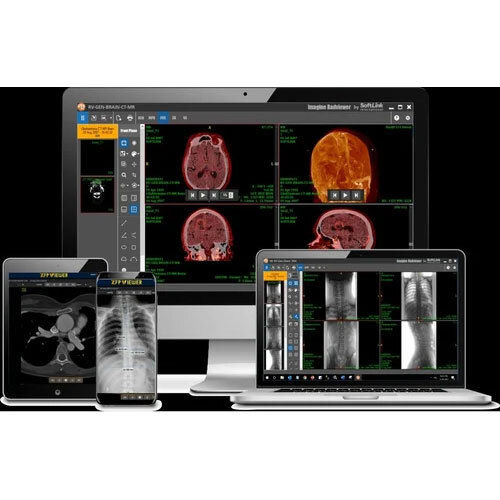
Tell us about your requirement

Price:
Quantity
Select Unit
- 50
- 100
- 200
- 250
- 500
- 1000+
Additional detail
Mobile number
Email

More Products in Hospital Management Software Category


 Send Inquiry
Our Products
- Ultrasound Machine
- Home Healthcare Services
- ICU Ventilator
- Digital X Ray System
- ECG and Holter Monitor
- CT Scanner
- Anesthesia Workstation
- ICU Products
- C-Arm Machine
- Patient Monitor
- Cath Lab Machine
- Benaka Industrial Equipments
- MRI Scanner
- Ambulance Ventilator
- Lab Diagnostic Product
- AED And Defibrillator
- Hospital Furniture
- Hyperbaric Oxygen Therapy Chamber
- Cardiology Products
- Dialysis Machine
- Hospital Management Software
- Gynecology Products
- Ophthalmology Equipment
- Ambulance Fabrication Service
- Laparoscopic Camera
- Hospital Turnkey Projects
- Hospital Interior Design Services
- Modular Operation Theater
- Cold Room Turnkey Project
- Veterinary Hospital Equipment
- SS Fabrication Work
- Medical Gas Management
- Clean Room Solutions

B No. 36, 6th Cross, 10th Main, 4th Phase, BSK 3rd Stage, Bengaluru - 560085, Karnataka, India

Mr D C Chetan
(Founder & C.E.O.)
Mobile :08045477019
 Send Inquiry
 Send SMS
Developed and Managed by Infocom Network Private Limited.


